Category Archives: Uncategorized

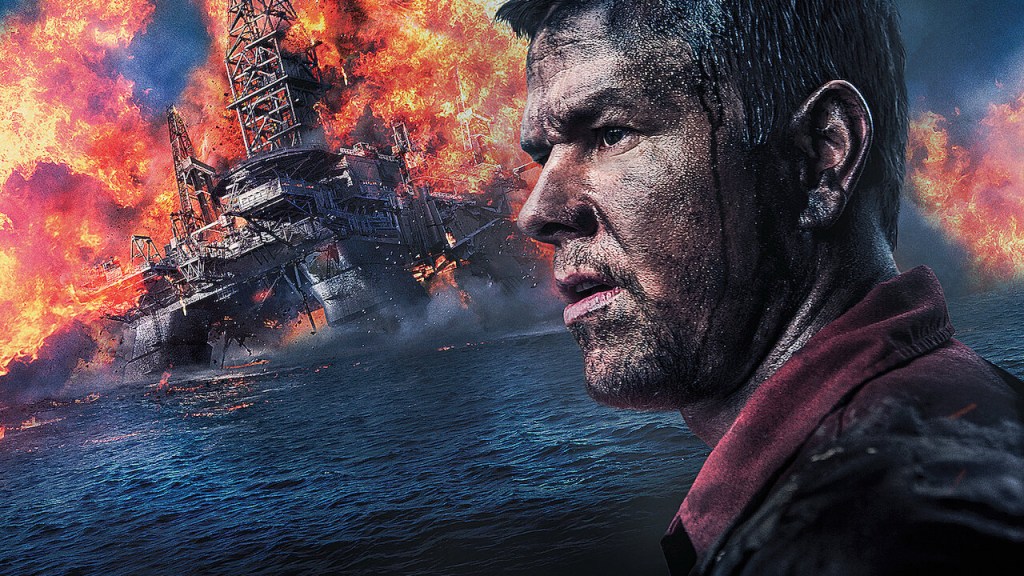
Deepwater Horizon: A Disaster Built One Mistake at a Time

As slow burn as you can possibly get. I think I started writing this around the 46-minute mark and basically nothing had happened yet, and somehow that is exactly why it works. Because you know this oil rig is going to explode. You are just sitting there waiting for the universe to cash the check. Every conversation feels wrong. Every test feels wrong. Every quiet little moment feels like it is the last normal second these people are ever going to have. And the music knows it too. It just keeps tightening the screws until finally, right around that 51-minute mark, it all goes to hell. And from there the movie basically turns into a forty-minute fight scene against fire, metal, oil, and gravity.

The movie follows the Deepwater Horizon rig on April 20, 2010, with Mike Williams heading offshore for another rotation while the rig is already dealing with delays and pressure from above. The setup is pretty simple and pretty terrifying. The people actually doing the work know there are issues. The people worrying about time and money want to move things along anyway. That is what makes the first half of the movie so effective. It is not boring because nothing is happening. It is nerve-wracking because you can tell something is happening, just in slow motion, under the floorboards, below the surface. The rig is behind schedule, over budget, and the movie makes it very clear that some of the most important safety checks are being treated like obstacles instead of lifelines.

So while Mike and the crew are trying to do their jobs, the BP executives are pushing to get the well finished and move on. One of the biggest warning signs is that the cement work meant to keep the well sealed is not being fully verified before they move ahead. Then they do the pressure tests, and instead of treating the weird results like the giant flashing warning lights they obviously are, the men in charge keep rationalizing them away. That is the real horror of the movie. Not just that equipment fails, but that people keep talking themselves past danger because they do not want the answer to be inconvenient.

Then, like I said, around the 51-minute mark, the movie drops the hammer. The well blows out, and the rest of the film becomes pure chaos. Fire erupts, the rig tears itself apart, men are trapped, burned, thrown, scrambling through smoke and collapsing steel while the whole platform basically becomes a flaming death maze in the middle of the ocean. And what I like about the movie is that once the disaster starts, it does not stop to admire itself. It just goes. It becomes this relentless survival movie where every hallway is a threat, every machine is turning against them, and every second matters.

Mike is trying to save who he can. Jimmy Harrell is badly hurt but still trying to take control. Andrea Fleytas is trying to sound the alarm and get help moving. Crew members are making split-second choices just to get people off the rig before it completely goes under. There is one sacrifice after another, one near miss after another, and the whole thing has that awful feeling where you know some of these people are not making it out, but the movie keeps you hanging onto hope anyway. That is why calling it a forty-minute fight scene honestly kind of fits. It is not a courtroom fight or a fistfight. It is a fight against a disaster that is already bigger than everyone on that rig.

Eventually the survivors get off, but there is no real triumph to it because the movie never lets you forget the human cost. Eleven men died. The survivors are ferried away while the rig burns behind them like some floating funeral pyre, and when they finally get back to their families there is relief, yes, but also guilt, shock, and that horrible feeling of knowing other families are not getting the same reunion. That is one of the movie’s better choices. It does not end when the characters leave the rig. It makes you sit in the aftermath a little. It reminds you that surviving the explosion is only one part of the story.

This became the worst oil spill in U.S. history. The blowout lasted 87 days and released an estimated 210 million gallons of oil into the Gulf of Mexico. Official investigations found that the disaster followed a failed cement job, misread pressure-test results, delayed recognition of the hydrocarbon influx, and then failure of the blowout preventer to seal the well when everything else had already gone wrong.  

As for what actually led to it, the ugly answer is that it was not one single thing. It was a stack of bad decisions and failed barriers. Federal investigators found BP made a series of choices before April 20 that added risk to the well, including relying on only one cement barrier, making design choices that increased the risk of hydrocarbon influx, and moving ahead with a cement job that was not handled according to accepted recommendations. Investigators also found those growing risks were not communicated well enough to the crew on the rig.  

Then came the negative pressure test, which was supposed to confirm the well was safely sealed before temporary abandonment. Instead, the test produced anomalies that should have screamed that the barrier had failed. The crew and BP personnel misinterpreted those results and treated the well as secure when it was not. As the official reports put it, the blowout followed failure of the cementing job, misinterpretation of pressure tests, and continued operations while the crew remained unaware that hydrocarbons were already moving into the well.  

After that, the next layer failed too. The crew did not detect the kick quickly enough, and by the time hydrocarbons reached the rig, emergency actions were not enough to stop it. Investigators found the rig crew missed or did not properly act on signs of the influx, and once the explosions damaged systems and the drill pipe buckled, the blowout preventer’s blind shear ram could not fully shear the pipe and seal the well. That is why the event became so catastrophic. It was not just one failed safety system. It was a chain reaction where every backup came up short when it mattered most.  

So really, Deepwater Horizon works because it understands that the scariest disasters are usually not random. They are built. One shortcut, one ignored warning, one rationalized test result at a time. The movie gives you the explosion, sure, but the thing that lingers is everything that happened before it. Because the real terror is knowing this rig did not just suddenly explode out of nowhere. It was talked into exploding.

Roofman: The Ultimate Swerve

The big problem with Roofman is that the movie really wants to portray Jeffrey as a great guy. And yes, he does a few “nice” things here and there. At one point he gives a coat to someone he has just locked in a freezer while robbing a McDonald’s. Which is kind of like punching someone in the face and then handing them an ice pack like you deserve credit for bedside manner. But ultimately, Jeffrey is still a thief.

Roofman is based on the real-life story of Jeffrey Manchester, a divorced U.S. Army veteran in North Carolina who is struggling to provide for his three young children. Mostly broke and desperate, Jeffrey has a genius idea. He’s going to apply for a job, work his way up the corporate ladder, and finally provide for his kids and his ex-wife…..nah, I’m just kidding with you. He decides he’s going to start robbing businesses.

One of his old airborne buddies reminds him that he has a real gift for observation, and calls him the smartest and dumbest man he knows. That pretty much sums Jeffrey up for the entire movie. He starts breaking into stores through the roof at night, which gets him dubbed “The Roofman” by local law enforcement. He pulls this off around 40 times before the police finally catch him, and he ends up sentenced to 45 years in prison.

Now at this point, you’d think Jeffrey would realize he has done wrong, not just to his community but to himself, and maybe decide to turn his life around. Maybe devote himself to Christ. Maybe become a changed man and a source of hope to the people around him…nah, I’m just kidding with you. Jeffrey hatches another plan and escapes prison by hiding underneath a truck.

From there, the movie somehow gets even more ridiculous. Jeffrey sneaks into a Toys R Us as it’s closing, climbs up into the ceiling tiles, and decides this giant toy store is now going to be his new secret home base. He builds a little fort out of merchandise, rigs up cameras to spy on the store, and basically turns the place into his own weird hideout while he waits on fake IDs that will supposedly help him flee to South America.

And for a minute, the movie almost tricks you into thinking maybe this is where Jeffrey is going to show some actual humanity. He overhears a manager named Leigh talking about a church toy drive, and when her boss refuses to help, you think maybe Jeffrey will go out and use some of his saved money to do something kind. Maybe buy some toys for the kids. Maybe prove there’s a decent man somewhere under all this foolishness…..nah, of course not. He steals the toys from Toys R Us and donates them himself. 

So now he’s getting praised for generosity while literally giving away stolen merchandise. And somehow this works, because this is where he starts getting close to Leigh and her daughters. He slowly builds a relationship with them, gets welcomed into their lives, and keeps bonding with them while fully knowing that the whole thing is built on lies and that he is eventually going to break their hearts.

That’s what makes the movie so frustrating. It keeps trying to frame Jeffrey as this troubled, misunderstood guy who just can’t get out of his own way. But he’s not just making mistakes. He is actively choosing the worst possible thing over and over again. Every time life presents him with even the tiniest chance to do the right thing, he takes a hard left into stupidity.

Eventually Jeffrey learns how much money he’ll need to get the fake IDs and make his South America plan happen. So he changes Leigh’s work schedule in the store computer to make sure she shows up later, giving him time to rob the store that morning. That plan works right up until Leigh walks in during the robbery and recognizes him, even though he’s wearing a mask. He still escapes, still meets up with his contact, still hands over the money, and for one brief moment it looks like his absurd little plan might actually work.

He’s got the IDs coming. He’s got the airport setup. He’s got a contact who’s supposed to wave him through. Everything is in motion.

Then, on the morning he’s supposed to leave for South America, Leigh calls and invites him over for Christmas. And this is where the movie tries to make you think Jeffrey is torn between the life he could have and the mess he has made. He tells her he can’t come. He hangs up. He boards the plane. He leaves for South America and never sees Leigh again….nah, I’m just kidding with you.

Instead, he goes to her house and gets arrested almost immediately because she obviously knew it was him and told the police. So now, on top of everything else, he gets hit with an additional 32 years on his sentence.

And now surely, surely, Jeffrey has learned his lesson. Surely now he decides he’s done running, that he’s finally going to live out the rest of his sentence and devote himself to becoming a better man…..nah for the final time, Jeffrey tried to escape prison two more times. And that, apparently, is our hero.

That is the fundamental issue with Roofman. The movie seems fascinated by Jeffrey’s charm, his cleverness, and his odd little acts of kindness, but it never really grapples with the fact that he is an absolute scumbag of a human being. This is a man who repeatedly ruins not only his own life, but the lives of everyone around him, all while the movie keeps nudging you like, “Come on, isn’t he kind of lovable?”

No. He’s not.

He’s frustrating. Deeply frustrating. Because every single time he does anything, you already know it’s going to be the wrong choice. There’s no suspense in that. There’s just dread. You watch him move through the story like a man determined to sabotage every possible off-ramp to a better life.

So no, I do not recommend Roofman one bit. I found it incredibly frustrating from start to finish.

Now, if you want a really good thief movie, go watch Inside Man instead. You’ve got Denzel Washington trying to get everyone out safely while Clive Owen and his crew pull off a robbery that is packed with twists. Inside Man is a 10 out of 10 while Roofman is the movie that keeps asking you to admire a guy who never stops making the worst possible decision.

World War Joe

Apple’s $250 Million Pit Stop: The F1 Movie That Forgot the Finish Line

When a studio sets out to make a movie, the logic should be simple: spend modestly, earn big. But Apple’s latest cinematic detour with F1—a racing drama starring Brad Pitt—is a reminder that Hollywood still hasn’t mastered that math.

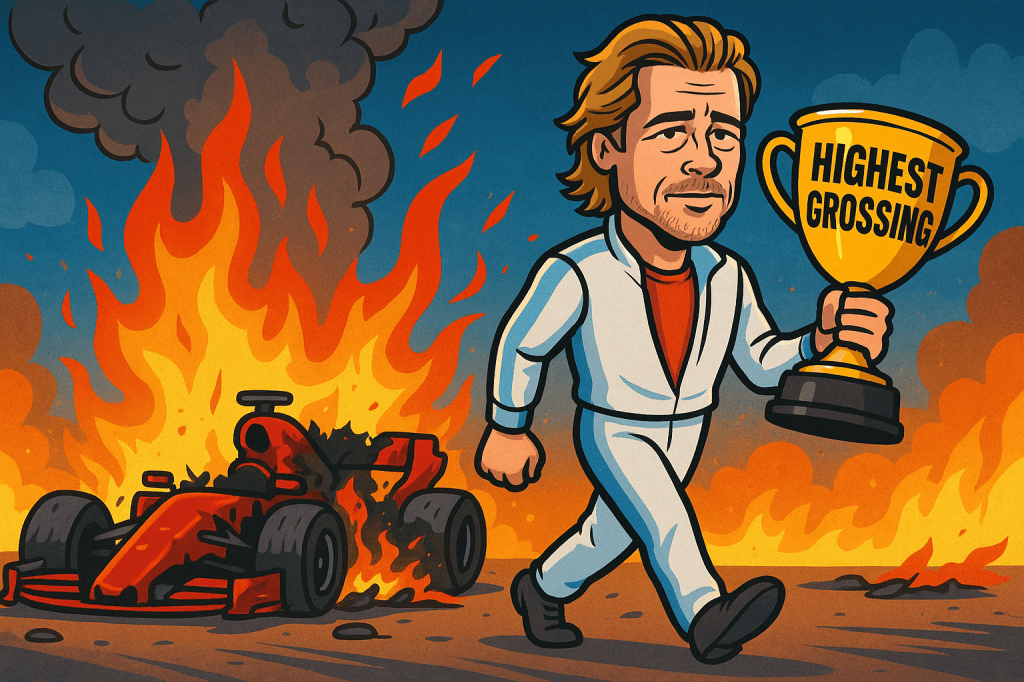
F1 has now become the highest-grossing original film of the year… with a box office haul of just $410 million. That might sound like a win until you realize the budget was reportedly $250 million, with some estimates ballooning closer to $300 million—and that’s before adding “significant marketing costs.” What marketing, exactly? The speaker hasn’t seen a single trailer, ad, or even whisper of the film’s existence in mainstream promo channels.

Let’s break this down. It’s a racing movie. Not Avatar. Not a CGI-heavy space opera. A film that, in theory, shouldn’t need hundreds of millions in digital effects. Yet here we are.

Brad Pitt remains a respectable name in film, but is he still a box office draw worth that kind of paycheck? The speaker raises the very real question: Could this movie have been made for hundreds of millions less without him? Probably.

And this isn’t an isolated incident. The pattern continues with big studio releases that “make” hundreds of millions and still somehow lose money. Quantum Mania, The Marvels, Thunderbolts—all examples of massive box office totals paired with even more massive losses.

Apple, flush with iPhone profits, seems to be treating its streaming service like a tax write-off. Movies like Napoleon appeared in theaters for a blink before heading to streaming, making one wonder: Why would anyone pay to see these in theaters if they’ll be online in a week?

Bottom line? F1 is the most profitable original movie of the year. And still, it’s a disaster. The math doesn’t add up—but then again, neither does most budgets today. 

World War Joe 

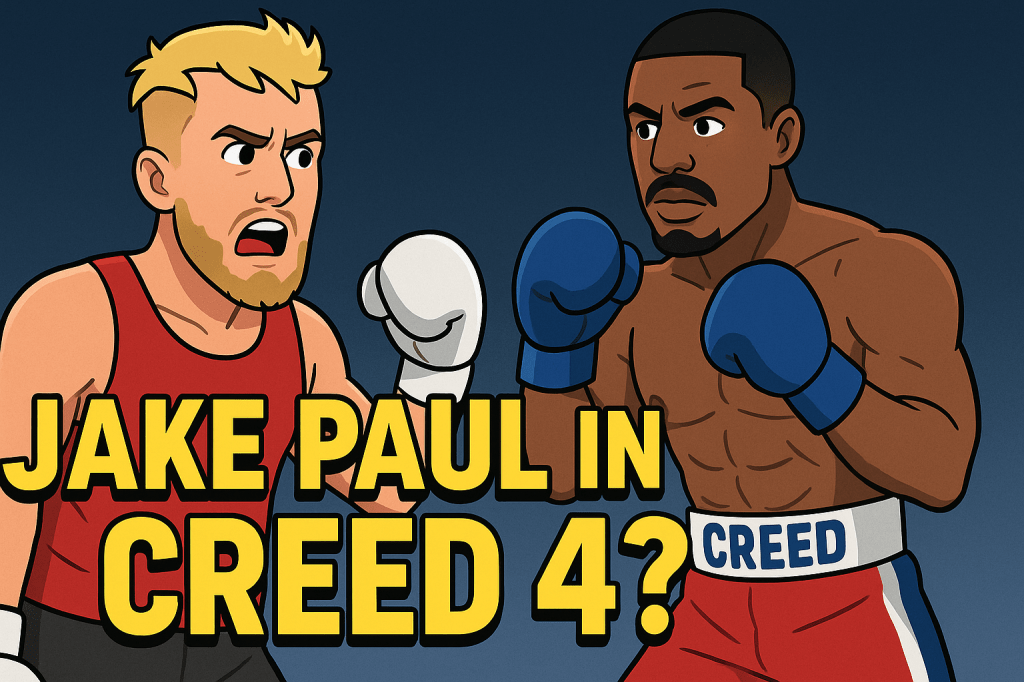
Jake Paul in Creed 4?

Jake Paul in Creed 4? Please No.

Hollywood has a bad habit of chasing trends without understanding what actually makes something work. Case in point: the swirling rumor that Jake Paul might appear in Creed 4. Whether he’ll show up as a villain, a cameo, or a full-on opponent for Adonis Creed hasn’t been confirmed—but even as a whisper, it’s a bad idea.

Let’s break this down.

Jake Paul is a former Disney Channel star who pivoted to boxing—not through traditional routes, but by handpicking opponents like retired UFC fighters, ex-NBA players, and past-their-prime boxers. The man’s entire boxing career has been built more on spectacle than sport. And that’s not even touching the allegations that some of his fights are rigged, with slow-motion footage suggesting clear pre-arranged signals before knockouts.

So why inject that kind of circus energy into a franchise that, up to this point, has been about legacy, struggle, and legitimate athletic drama? The Creed series built itself as a worthy continuation of the Rocky saga—stories rooted in grit, growth, and real emotion. Jake Paul undermines that.

Some might argue it’s just a cameo. A blink-and-you’ll-miss-it moment. But even then—why? What’s the point of putting a divisive internet personality in a franchise built on authenticity? It doesn’t boost credibility. It doesn’t honor the sport. It doesn’t add anything, except maybe headlines from the kind of sites that confuse buzz for quality.

Let’s hope this stays a rumor. Because if Creed 4 wants to keep swinging with heart, it shouldn’t be shadowboxing with YouTube gimmicks.

World War Joe

Spiderman 3 Will Flop

Ahsoka Season 2: Leia to the Rescue? Or Just Another Star Wars Rehash?

On this episode of “Why Weren’t You in Season One?” I tackle the latest from Screen Rant, who boldly declare that Ahsoka Season 2 “must finally make one heartbreaking recast.” And by heartbreaking, they mean recasting Princess Leia—again. But… didn’t that already happen?

Let’s rewind a bit. Remember Rogue One? That final scene with Leia that led right into A New Hope? Yeah, that wasn’t actually Carrie Fisher. It was CGI. They even brought Grand Moff Tarkin back from the dead using digital sorcery—and the world kept turning. So why all the hand-wringing now?

The truth is, Ahsoka Season 1 already felt like it was missing half the galaxy. Where were Luke, Han, Leia? If we’re pretending Admiral Thrawn is the next Thanos-level threat, where were the actual big players? When Ewan McGregor’s wife asked for backup, the New Republic practically laughed in her face. Wouldn’t that have been the perfect time for Princess Leia to show up and lend some real weight to the mission? You know—troops, authority, relevance?

But no. Instead, we got a ragtag team trying to save the galaxy while the rest of the characters seemingly just scrolled past the group chat.

Now, Ahsoka Season 2 is somehow greenlit. Yes, one of the lowest-rated shows on Disney+—a series that most fans, especially the ones who care about Star Wars lore, universally panned—is getting a second season. It’s a move that feels less like a creative decision and more like a stubborn refusal to read the room.

And here’s the kicker: Screen Rant’s article argues that Leia “needs to be shown as the hero Carrie Fisher should have gotten to be.” That sentence alone is confusing enough, but the irony is worse. This same outlet has already published multiple articles claiming Leia was already the real hero of Star Wars. One in 2021: “10 Reasons Leia Was the Original Trilogy’s Real Hero.” Another in 2024: “Leia Was the Real New Hope in the Original Trilogy.”

So which is it? Leia was already the real MVP… or we need to force her into Ahsoka Season 2 to prove it all over again?

Disney seems dead set on rewriting the mythos, show by show. And now, it looks like Ahsoka Season 2 is shaping up to be less about Ahsoka and more about Leia 2.0—probably a CG version, because let’s be real, they’re not going to recast her. Much like Luke in The Mandalorian, we’ll likely get a face-mapped digital Leia, slapped onto a body double and run through some AI filters. It’s not about the story anymore—it’s about keeping IPs on life support with nostalgia cameos and legacy-brand cameos.

At this point, does it even matter when the show comes out? Will anyone notice? Season 1 already came and went with all the fanfare of a whisper. So what’s Season 2 supposed to fix?

Let me know what you think. Should Leia have been in Season 1? Will Season 2 turn the ship around? Or are we just watching Disney dig a deeper hole in a galaxy far, far away?

I Made A Garden