Arcadian: The Ultimate Father Son Survival Movie

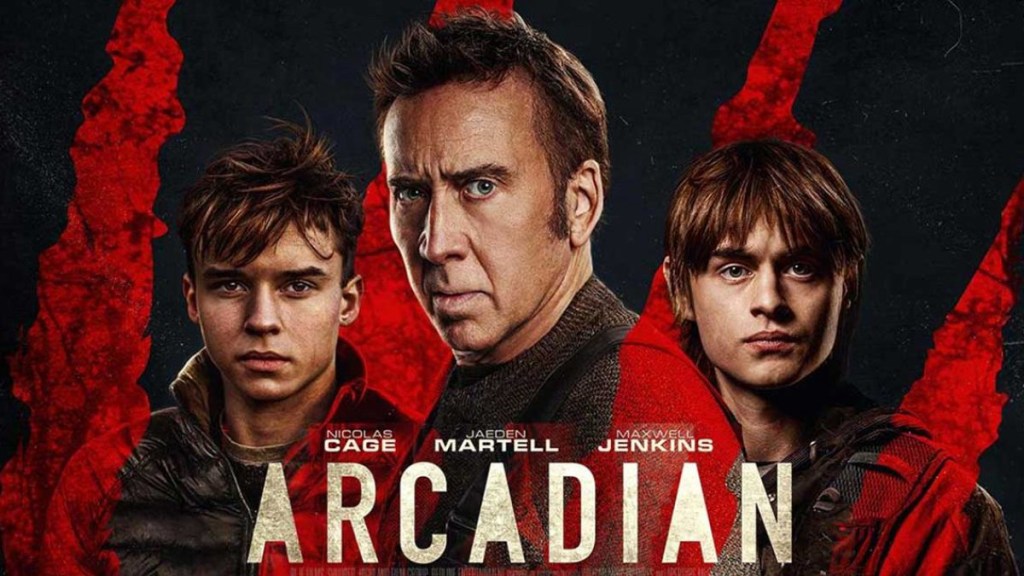
Sometimes the best apocalypse movies are not the ones trying to explain every little detail. Not every monster needs a ten minute speech. Not every world-ending event needs a scientist pointing at a screen while dramatic music plays. Sometimes it is enough to throw you into a broken world, hand you a father, his two sons, and a house that barely keeps the dark out, and let the fear do the rest. Arcadian is one of those movies. It is not about rebuilding society or finding a cure or saving the world. It is about surviving one more night in a place where the sun goes down and something awful starts scratching at the walls.

The movie opens during the collapse itself. Paul is running through pure chaos, scavenging supplies while the world seems to be ending all around him. Sirens, explosions, screaming, people panicking, everything falling apart at once. And in the middle of all that madness, all he really cares about is protecting his two infant sons. That opening does a great job telling you exactly what kind of story this is going to be. This is not about governments or politics or giant explanations. This is about a man trying to keep his children alive while the world burns down around them.

Then the movie jumps fifteen years ahead. Civilization is basically gone. Society has rotted away. Most people are dead, and what is left of humanity has been reduced to scattered farms and fragile little routines built around one simple rule: do not be caught outside after dark. Paul now lives in this run-down farmhouse with his twin sons, Joseph and Thomas, and the three of them have managed to scrape together some kind of life. During the day they scavenge, fix things, grow what they can, and try to make the house a little harder to break into. At night they lock themselves in and wait for the creatures outside to try their luck.

Right away the movie sets the brothers apart. Thomas is the impulsive one, the dreamer, the kid more likely to take a stupid risk because a girl is involved. Joseph is quieter, more thoughtful, more practical, and clearly the one thinking not just about survival today but maybe how they survive better tomorrow. That difference matters because Paul is trying to prepare both of them for a world that is not going to give them many second chances. And one of the things the movie does really well is show that survival itself has become this strange, exhausting routine. Even dinner feels tense. Even silence feels tense. They hear banging at the cellar door at night, and nobody reacts like this is some shocking new event. It is just part of life now. Something is always trying to get in.

The next day, Paul sees the damage outside and realizes the house is getting weaker. The creatures are adapting, testing, digging, learning. Meanwhile Joseph shows him that he has been secretly working on fixing up an off-road buggy, which is one of those little hopeful details in the film. Joseph is trying to build something. Trying to improve their odds. Trying to make the future slightly less miserable. Paul helps him get it running, then sends both boys out to gather wood so they can reinforce the cellar door. But Thomas, being Thomas, has other priorities. He wants to go see Charlotte Rose at the neighboring farm, and that bad decision starts the whole disaster rolling downhill.

Thomas ends up staying too long, then on the way back he falls into a cave, hits his head, and gets stranded out there after dark. Joseph makes it home without him, and once Paul realizes his son is missing, he goes back out into the night to find him. That right there tells you everything about Paul but at the same time exhibits what a regular father would do for his child. He knows exactly how dangerous it is. He knows night belongs to the creatures. He goes anyway. He finds Thomas in the cave, but now they are trapped there until sunrise, and of course that is when the monsters show up. This whole sequence is probably the movie at its best because it is pure desperation. Tight spaces, darkness, these things crawling through the rocks toward them, and Paul trying to hold it together while everything closes in. He lights a flare, sets off an explosive, gets his hand mangled in the process, and barely gets them out alive.

Back at the house, Joseph has been dealing with his own nightmare. Alone for the night, he actually manages to trap one of the creatures because instead of just panicking, he wants to understand it. Again, that tells you who Joseph is. Thomas runs on emotion. Joseph runs on curiosity and planning. He uses himself as bait, traps one of these nightmare things, and starts trying to study it. It is a risky move, but it also feels like the first real sign that somebody in this world might actually be thinking beyond “barricade door and pray.” When morning comes, Joseph finds Paul and Thomas, gets them home in the buggy, and it is obvious Paul is in bad shape.

Thomas insists they need to go to the Rose farm because Paul will die without medicine, and this is where the movie starts tightening the screws even harder. The Rose family has more supplies and better shelter, but they are not exactly eager to share. They are kind of the classic survivalist family where the circle closes tight once resources get scarce. They will help a little, but not enough. They say Paul is basically on his own. They are willing to let Thomas stay, though, which immediately causes tension between the brothers. Joseph wants to stick with their father. Thomas is torn between family, Charlotte, and the possibility of an easier life. So Joseph heads back home with a dying Paul, while Thomas stays behind.

From there, things spiral fast. Thomas tries to steal medicine for his father and gets caught. Meanwhile Joseph discovers the real problem at their house is even worse than they thought. The creatures are not just attacking doors anymore. They are tunneling underneath the floor. They are literally burrowing their way in. That detail is so creepy because it takes away even the illusion of safety. It is not just that the walls may not hold. It is that the ground itself is giving up on you. And sure enough, the same thing starts happening at the Rose farm. The creatures come up from below, tear through the place, and the whole farm turns into a slaughterhouse.

Thomas and Charlotte barely escape and make it back to Paul’s farm, which at this point is basically one last stand waiting to happen. Paul wakes up long enough to help them come up with a plan, and it is one of those grim apocalypse movie moments where everybody knows what this is building toward. Joseph starts rigging a trap using gallons of fuel as a makeshift bomb, hoping they can torch the creatures and buy themselves a chance to run. 

But there is a moment I want to highlight before Paul sacrifices himself to give his children more time. It’s brief. And if you blink you’ll miss it. Hw looks over at his sons and realizes he’s done his job as a father. He’s prepared them for the new world. He sees the working together and knows they’ll be fine. And then right after he sees that he walks out into the hallway to meet his fate in an explosion that rips the house apart. 

That ending works because the movie never tries to dress it up as some big heroic speech moment. It is just a father doing what he has been doing since the opening scene. Buying his boys one more chance to live. One more day. One more morning. And by the next day, when Charlotte buries her parents and joins Joseph and Thomas on the road, the movie ends on this quiet note of battered hope. The world is still ruined. The monsters are still out there. Nothing is fixed. But these kids are moving forward anyway, checking other farms, looking for survivors, carrying on because that is all they can do.

So really, Arcadian is not just a monster movie. It is a stripped-down survival story about family, instinct, and the terrible little bargains people make just to see another sunrise. It keeps the scope small, which actually makes it hit harder. No grand saving-the-world mission. No cure. No chosen one nonsense. Just a father, two sons, and the awful realization that in this world, night always comes back.

Roofman: The Ultimate Swerve

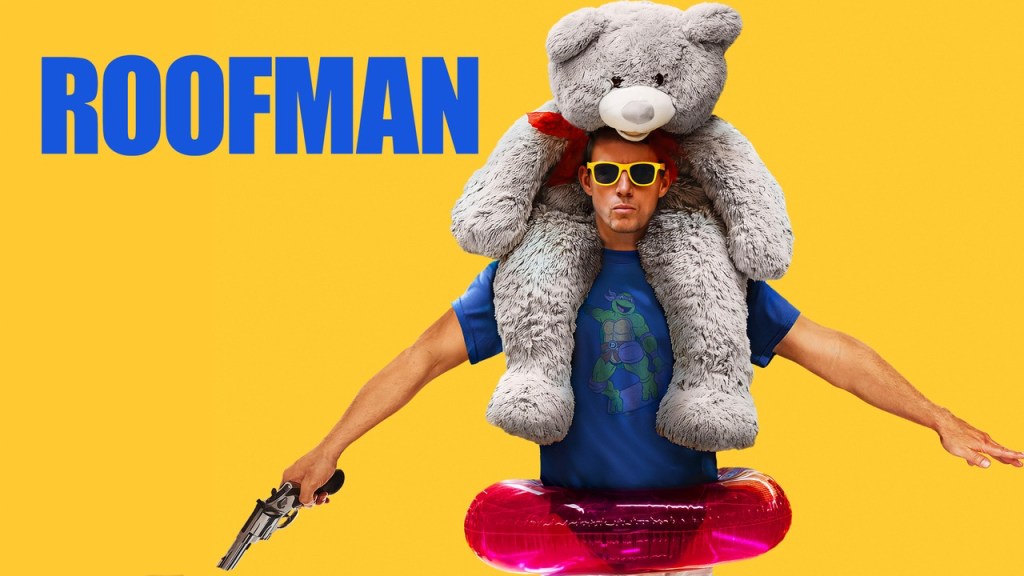
The big problem with Roofman is that the movie really wants to portray Jeffrey as a great guy. And yes, he does a few “nice” things here and there. At one point he gives a coat to someone he has just locked in a freezer while robbing a McDonald’s. Which is kind of like punching someone in the face and then handing them an ice pack like you deserve credit for bedside manner. But ultimately, Jeffrey is still a thief.

Roofman is based on the real-life story of Jeffrey Manchester, a divorced U.S. Army veteran in North Carolina who is struggling to provide for his three young children. Mostly broke and desperate, Jeffrey has a genius idea. He’s going to apply for a job, work his way up the corporate ladder, and finally provide for his kids and his ex-wife…..nah, I’m just kidding with you. He decides he’s going to start robbing businesses.

One of his old airborne buddies reminds him that he has a real gift for observation, and calls him the smartest and dumbest man he knows. That pretty much sums Jeffrey up for the entire movie. He starts breaking into stores through the roof at night, which gets him dubbed “The Roofman” by local law enforcement. He pulls this off around 40 times before the police finally catch him, and he ends up sentenced to 45 years in prison.

Now at this point, you’d think Jeffrey would realize he has done wrong, not just to his community but to himself, and maybe decide to turn his life around. Maybe devote himself to Christ. Maybe become a changed man and a source of hope to the people around him…nah, I’m just kidding with you. Jeffrey hatches another plan and escapes prison by hiding underneath a truck.

From there, the movie somehow gets even more ridiculous. Jeffrey sneaks into a Toys R Us as it’s closing, climbs up into the ceiling tiles, and decides this giant toy store is now going to be his new secret home base. He builds a little fort out of merchandise, rigs up cameras to spy on the store, and basically turns the place into his own weird hideout while he waits on fake IDs that will supposedly help him flee to South America.

And for a minute, the movie almost tricks you into thinking maybe this is where Jeffrey is going to show some actual humanity. He overhears a manager named Leigh talking about a church toy drive, and when her boss refuses to help, you think maybe Jeffrey will go out and use some of his saved money to do something kind. Maybe buy some toys for the kids. Maybe prove there’s a decent man somewhere under all this foolishness…..nah, of course not. He steals the toys from Toys R Us and donates them himself. 

So now he’s getting praised for generosity while literally giving away stolen merchandise. And somehow this works, because this is where he starts getting close to Leigh and her daughters. He slowly builds a relationship with them, gets welcomed into their lives, and keeps bonding with them while fully knowing that the whole thing is built on lies and that he is eventually going to break their hearts.

That’s what makes the movie so frustrating. It keeps trying to frame Jeffrey as this troubled, misunderstood guy who just can’t get out of his own way. But he’s not just making mistakes. He is actively choosing the worst possible thing over and over again. Every time life presents him with even the tiniest chance to do the right thing, he takes a hard left into stupidity.

Eventually Jeffrey learns how much money he’ll need to get the fake IDs and make his South America plan happen. So he changes Leigh’s work schedule in the store computer to make sure she shows up later, giving him time to rob the store that morning. That plan works right up until Leigh walks in during the robbery and recognizes him, even though he’s wearing a mask. He still escapes, still meets up with his contact, still hands over the money, and for one brief moment it looks like his absurd little plan might actually work.

He’s got the IDs coming. He’s got the airport setup. He’s got a contact who’s supposed to wave him through. Everything is in motion.

Then, on the morning he’s supposed to leave for South America, Leigh calls and invites him over for Christmas. And this is where the movie tries to make you think Jeffrey is torn between the life he could have and the mess he has made. He tells her he can’t come. He hangs up. He boards the plane. He leaves for South America and never sees Leigh again….nah, I’m just kidding with you.

Instead, he goes to her house and gets arrested almost immediately because she obviously knew it was him and told the police. So now, on top of everything else, he gets hit with an additional 32 years on his sentence.

And now surely, surely, Jeffrey has learned his lesson. Surely now he decides he’s done running, that he’s finally going to live out the rest of his sentence and devote himself to becoming a better man…..nah for the final time, Jeffrey tried to escape prison two more times. And that, apparently, is our hero.

That is the fundamental issue with Roofman. The movie seems fascinated by Jeffrey’s charm, his cleverness, and his odd little acts of kindness, but it never really grapples with the fact that he is an absolute scumbag of a human being. This is a man who repeatedly ruins not only his own life, but the lives of everyone around him, all while the movie keeps nudging you like, “Come on, isn’t he kind of lovable?”

No. He’s not.

He’s frustrating. Deeply frustrating. Because every single time he does anything, you already know it’s going to be the wrong choice. There’s no suspense in that. There’s just dread. You watch him move through the story like a man determined to sabotage every possible off-ramp to a better life.

So no, I do not recommend Roofman one bit. I found it incredibly frustrating from start to finish.

Now, if you want a really good thief movie, go watch Inside Man instead. You’ve got Denzel Washington trying to get everyone out safely while Clive Owen and his crew pull off a robbery that is packed with twists. Inside Man is a 10 out of 10 while Roofman is the movie that keeps asking you to admire a guy who never stops making the worst possible decision.

World War Joe

Madame Web Had ZERO Post-Credits & ZERO Connections — What the Hell Was Sony Thinking?

Look, it was obvious from the jump that Madame Web was going to bomb at the box office. But the real question that’s been eating at me is: what did Sony actually think was going to happen with this movie?

Zero post-credit scenes. Zero connections to anything else in the Spider-Man universe. They just dropped a completely standalone film with no plans for the future. And I’m sitting here like… why?

I talked about this same issue in an earlier video when I was breaking down the Echo and Agatha shows coming to Disney+. I asked: what if Echo turned out to be the greatest thing Disney+ has ever made? 50 million new subscribers, billions of views, the show is everywhere. Would they suddenly scrap all their plans and build the entire future around Echo? Would she be leading the Avengers? Probably not — because the show was built as a one-and-done. Same with Agatha. It’s a prequel. Cool. But then what? Are we ever seeing Agatha again in a meaningful way? Is her story getting resolved? Or is this just another expensive side project that goes nowhere?

That’s exactly what they did with Madame Web.

In the ’90s cartoon, Madame Web was tied directly into Spider-Man’s world. She was part of his storyline, helping him, guiding him — she actually mattered. In this movie? Nothing. She’s not in Tom Holland’s universe. She’s not in Andrew Garfield’s. She’s not in Tobey Maguire’s. Sony made a full theatrical movie about a major Spider-Man character… and then just left her floating in her own little bubble.

You can’t do that with franchises this big.

Look at what DC is doing right now. The Batman comes out, it’s a hit, and boom — they immediately greenlight The Penguin series. That show is clearly setting up bigger things, and we all know Robert Pattinson’s Batman is coming back to collide with Colin Farrell’s Penguin eventually. That’s how you do spin-offs. You plant seeds. You build toward something.

Madame Web? No seeds. No post-credits stinger like Ant-Man and the Wasp that basically saved the entire movie by teasing Endgame. This film was 100% disposable. You walk out and there’s literally nothing you can point to and say, “Okay, it was bad… but at least it set up X.” It didn’t flesh out the Sony Spider-Man Universe. It didn’t lead into Venom. It didn’t lead into anything. So what was the point?

That’s what I want to know from you guys in the comments:

•  What do you think the best-case scenario for this movie actually was?

•  If Sony had to make a Madame Web movie, which Spider-Man universe should she have been tied to — Tobey, Andrew, or Tom Holland’s?

•  And most importantly… why do studios keep wasting hundreds of millions of dollars on these half-baked, standalone “event” movies that go absolutely nowhere?

Because until they figure this out, we’re just gonna keep getting more Morbius-level disasters.

Let me know what you think down below. Smash that like button if you’re tired of these pointless cash-grabs too, and I’ll see you in the next one.

Apple’s $250 Million Pit Stop: The F1 Movie That Forgot the Finish Line

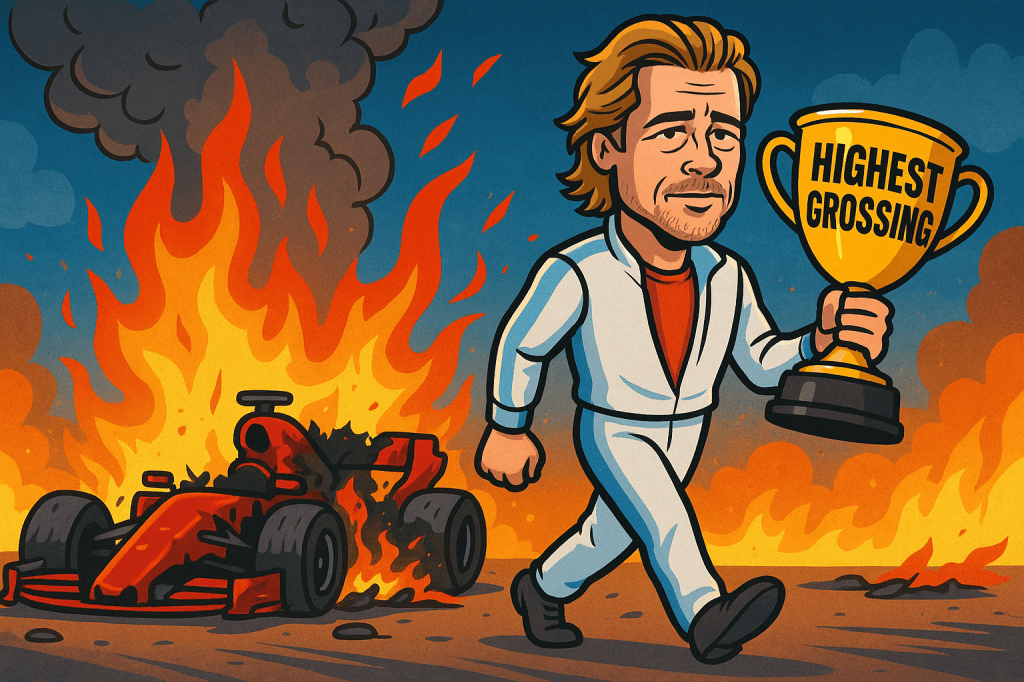
When a studio sets out to make a movie, the logic should be simple: spend modestly, earn big. But Apple’s latest cinematic detour with F1—a racing drama starring Brad Pitt—is a reminder that Hollywood still hasn’t mastered that math.

F1 has now become the highest-grossing original film of the year… with a box office haul of just $410 million. That might sound like a win until you realize the budget was reportedly $250 million, with some estimates ballooning closer to $300 million—and that’s before adding “significant marketing costs.” What marketing, exactly? The speaker hasn’t seen a single trailer, ad, or even whisper of the film’s existence in mainstream promo channels.

Let’s break this down. It’s a racing movie. Not Avatar. Not a CGI-heavy space opera. A film that, in theory, shouldn’t need hundreds of millions in digital effects. Yet here we are.

Brad Pitt remains a respectable name in film, but is he still a box office draw worth that kind of paycheck? The speaker raises the very real question: Could this movie have been made for hundreds of millions less without him? Probably.

And this isn’t an isolated incident. The pattern continues with big studio releases that “make” hundreds of millions and still somehow lose money. Quantum Mania, The Marvels, Thunderbolts—all examples of massive box office totals paired with even more massive losses.

Apple, flush with iPhone profits, seems to be treating its streaming service like a tax write-off. Movies like Napoleon appeared in theaters for a blink before heading to streaming, making one wonder: Why would anyone pay to see these in theaters if they’ll be online in a week?

Bottom line? F1 is the most profitable original movie of the year. And still, it’s a disaster. The math doesn’t add up—but then again, neither does most budgets today. 

World War Joe 

Netflix’s Assassin’s Creed: A Stealth Game Franchise That Can’t Escape Its Own Mistakes

Netflix is officially moving forward with a live-action Assassin’s Creed series—and somehow, they’ve learned absolutely nothing.

Remember the 2016 movie with Michael Fassbender? No? Exactly. Instead of delivering the assassin-centered story fans craved, we got a convoluted mess obsessed with the Animus and the “Apple of Eden.” That same misguided philosophy is likely creeping into this series, too—along with what seems to be a strategy focused more on headlines than quality storytelling.

I imagine the show would be more interested in scoring diversity points than in actually crafting a good narrative. There’s a growing trend where projects brag about their inclusive casting, then weaponize backlash to deflect from the real problem: the content just isn’t good.

You can already predict the PR cycle: puff pieces praising the vision, accusing audiences of bigotry for not tuning in, followed by a quiet flop and no season two.

Ubisoft, once a juggernaut of banger releases, now clings to fading relevance while the Assassin’s Creed games drift further from what made them popular in the first place—stealth, intrigue, and historical immersion. The newest games feel like off-brand Ghost of Tsushima clone, and now the Netflix series might follow suit. A better idea? Start small. Build interest with compelling side characters or spinoff content—then develop from there. But instead, it looks like they’re chasing social media impressions and bracing for bankruptcy.

At this point, fans can only hope for a miracle—or at least for Netflix to step aside and let Assassin’s Creed quietly vanish into the shadows where it belongs.

World War Joe

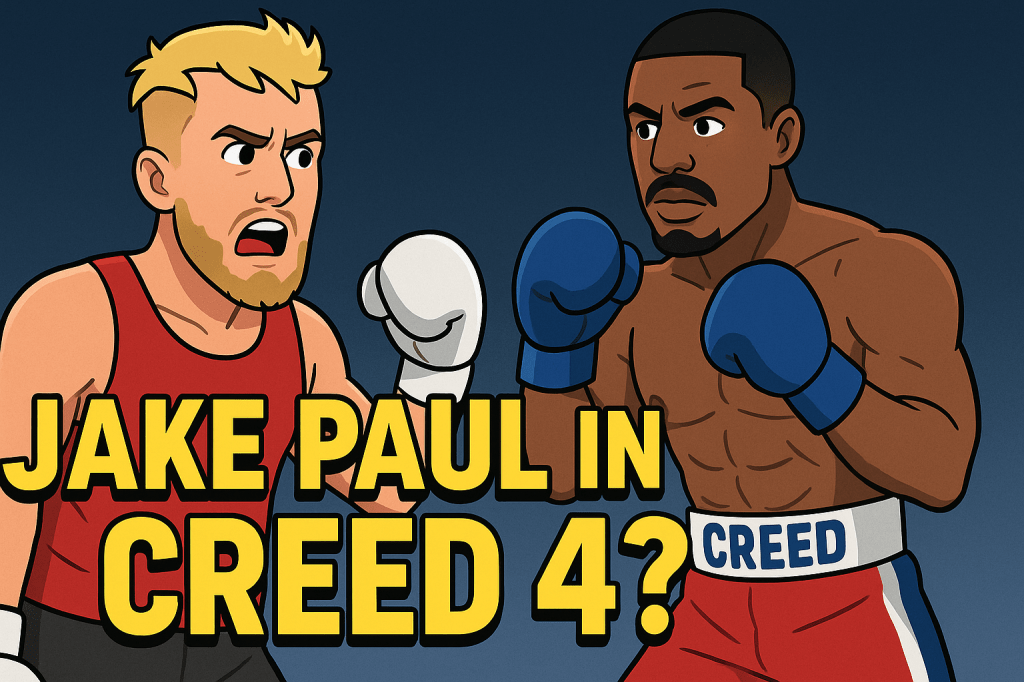
Jake Paul in Creed 4?

Jake Paul in Creed 4? Please No.

Hollywood has a bad habit of chasing trends without understanding what actually makes something work. Case in point: the swirling rumor that Jake Paul might appear in Creed 4. Whether he’ll show up as a villain, a cameo, or a full-on opponent for Adonis Creed hasn’t been confirmed—but even as a whisper, it’s a bad idea.

Let’s break this down.

Jake Paul is a former Disney Channel star who pivoted to boxing—not through traditional routes, but by handpicking opponents like retired UFC fighters, ex-NBA players, and past-their-prime boxers. The man’s entire boxing career has been built more on spectacle than sport. And that’s not even touching the allegations that some of his fights are rigged, with slow-motion footage suggesting clear pre-arranged signals before knockouts.

So why inject that kind of circus energy into a franchise that, up to this point, has been about legacy, struggle, and legitimate athletic drama? The Creed series built itself as a worthy continuation of the Rocky saga—stories rooted in grit, growth, and real emotion. Jake Paul undermines that.

Some might argue it’s just a cameo. A blink-and-you’ll-miss-it moment. But even then—why? What’s the point of putting a divisive internet personality in a franchise built on authenticity? It doesn’t boost credibility. It doesn’t honor the sport. It doesn’t add anything, except maybe headlines from the kind of sites that confuse buzz for quality.

Let’s hope this stays a rumor. Because if Creed 4 wants to keep swinging with heart, it shouldn’t be shadowboxing with YouTube gimmicks.

World War Joe

Spiderman 3 Will Flop

Ahsoka Season 2: Leia to the Rescue? Or Just Another Star Wars Rehash?

On this episode of “Why Weren’t You in Season One?” I tackle the latest from Screen Rant, who boldly declare that Ahsoka Season 2 “must finally make one heartbreaking recast.” And by heartbreaking, they mean recasting Princess Leia—again. But… didn’t that already happen?

Let’s rewind a bit. Remember Rogue One? That final scene with Leia that led right into A New Hope? Yeah, that wasn’t actually Carrie Fisher. It was CGI. They even brought Grand Moff Tarkin back from the dead using digital sorcery—and the world kept turning. So why all the hand-wringing now?

The truth is, Ahsoka Season 1 already felt like it was missing half the galaxy. Where were Luke, Han, Leia? If we’re pretending Admiral Thrawn is the next Thanos-level threat, where were the actual big players? When Ewan McGregor’s wife asked for backup, the New Republic practically laughed in her face. Wouldn’t that have been the perfect time for Princess Leia to show up and lend some real weight to the mission? You know—troops, authority, relevance?

But no. Instead, we got a ragtag team trying to save the galaxy while the rest of the characters seemingly just scrolled past the group chat.

Now, Ahsoka Season 2 is somehow greenlit. Yes, one of the lowest-rated shows on Disney+—a series that most fans, especially the ones who care about Star Wars lore, universally panned—is getting a second season. It’s a move that feels less like a creative decision and more like a stubborn refusal to read the room.

And here’s the kicker: Screen Rant’s article argues that Leia “needs to be shown as the hero Carrie Fisher should have gotten to be.” That sentence alone is confusing enough, but the irony is worse. This same outlet has already published multiple articles claiming Leia was already the real hero of Star Wars. One in 2021: “10 Reasons Leia Was the Original Trilogy’s Real Hero.” Another in 2024: “Leia Was the Real New Hope in the Original Trilogy.”

So which is it? Leia was already the real MVP… or we need to force her into Ahsoka Season 2 to prove it all over again?

Disney seems dead set on rewriting the mythos, show by show. And now, it looks like Ahsoka Season 2 is shaping up to be less about Ahsoka and more about Leia 2.0—probably a CG version, because let’s be real, they’re not going to recast her. Much like Luke in The Mandalorian, we’ll likely get a face-mapped digital Leia, slapped onto a body double and run through some AI filters. It’s not about the story anymore—it’s about keeping IPs on life support with nostalgia cameos and legacy-brand cameos.

At this point, does it even matter when the show comes out? Will anyone notice? Season 1 already came and went with all the fanfare of a whisper. So what’s Season 2 supposed to fix?

Let me know what you think. Should Leia have been in Season 1? Will Season 2 turn the ship around? Or are we just watching Disney dig a deeper hole in a galaxy far, far away?

Daredevil Born Again: A Reality Check for Disney+

Daredevil Born Again was supposed to be the show that brought back the Netflix-era magic of Marvel’s most beloved street-level hero. But now? It’s struggling to even match Agatha All Along in viewership numbers.

Disney+ was once an unstoppable force, delivering hit after hit, but those days are gone. Shows like Loki, WandaVision, and Falcon and the Winter Soldier had intrigue, but Daredevil had something more—an existing, passionate fanbase. After all, the Netflix Daredevil series is widely considered one of the best superhero shows ever made.

Yet, Daredevil Born Again premiered with only 7.5 million views in its first five days, compared to Agatha All Along’s 9.3 million and Loki Season 2’s 10.9 million. That’s an embarrassingly low number for a franchise that once dominated. Even The Acolyte, which Disney immediately canceled, had better numbers.

So, what went wrong?

Disney promised a fresh start, a return to form after scrapping their initial episodes and hiring new talent. Yet, signs of forced messaging and political themes crept back in. The leaked plot about corrupt cops tattooing The Punisher’s symbol had already turned fans off before release. And when the actual show confirmed those fears, many fans checked out.

The biggest issue? Fans simply don’t care anymore. After years of letdowns, Disney burned through goodwill, and now even a Daredevil revival can’t reignite interest.