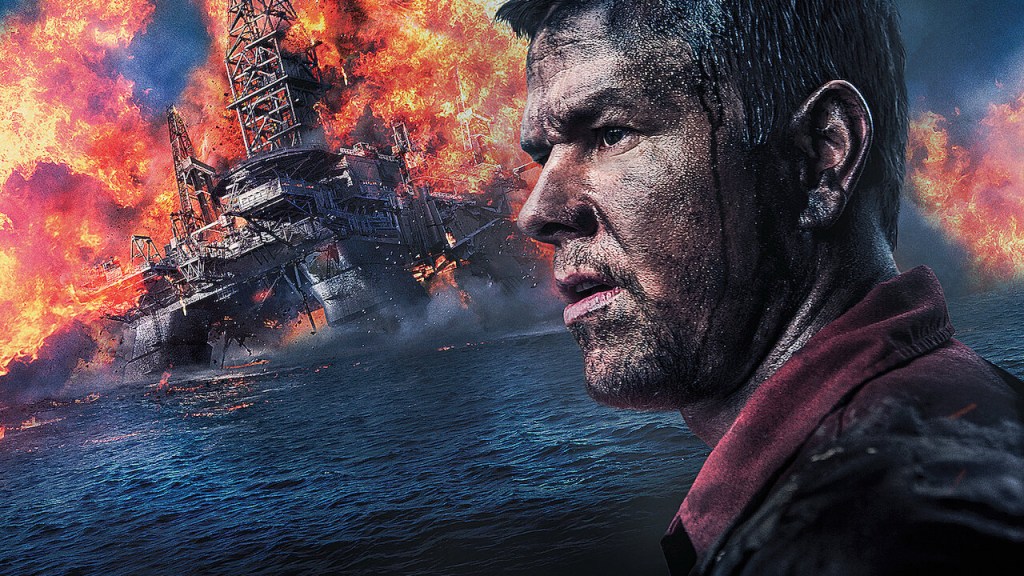
As slow burn as you can possibly get. I think I started writing this around the 46-minute mark and basically nothing had happened yet, and somehow that is exactly why it works. Because you know this oil rig is going to explode. You are just sitting there waiting for the universe to cash the check. Every conversation feels wrong. Every test feels wrong. Every quiet little moment feels like it is the last normal second these people are ever going to have. And the music knows it too. It just keeps tightening the screws until finally, right around that 51-minute mark, it all goes to hell. And from there the movie basically turns into a forty-minute fight scene against fire, metal, oil, and gravity.
The movie follows the Deepwater Horizon rig on April 20, 2010, with Mike Williams heading offshore for another rotation while the rig is already dealing with delays and pressure from above. The setup is pretty simple and pretty terrifying. The people actually doing the work know there are issues. The people worrying about time and money want to move things along anyway. That is what makes the first half of the movie so effective. It is not boring because nothing is happening. It is nerve-wracking because you can tell something is happening, just in slow motion, under the floorboards, below the surface. The rig is behind schedule, over budget, and the movie makes it very clear that some of the most important safety checks are being treated like obstacles instead of lifelines.
So while Mike and the crew are trying to do their jobs, the BP executives are pushing to get the well finished and move on. One of the biggest warning signs is that the cement work meant to keep the well sealed is not being fully verified before they move ahead. Then they do the pressure tests, and instead of treating the weird results like the giant flashing warning lights they obviously are, the men in charge keep rationalizing them away. That is the real horror of the movie. Not just that equipment fails, but that people keep talking themselves past danger because they do not want the answer to be inconvenient.
Then, like I said, around the 51-minute mark, the movie drops the hammer. The well blows out, and the rest of the film becomes pure chaos. Fire erupts, the rig tears itself apart, men are trapped, burned, thrown, scrambling through smoke and collapsing steel while the whole platform basically becomes a flaming death maze in the middle of the ocean. And what I like about the movie is that once the disaster starts, it does not stop to admire itself. It just goes. It becomes this relentless survival movie where every hallway is a threat, every machine is turning against them, and every second matters.
Mike is trying to save who he can. Jimmy Harrell is badly hurt but still trying to take control. Andrea Fleytas is trying to sound the alarm and get help moving. Crew members are making split-second choices just to get people off the rig before it completely goes under. There is one sacrifice after another, one near miss after another, and the whole thing has that awful feeling where you know some of these people are not making it out, but the movie keeps you hanging onto hope anyway. That is why calling it a forty-minute fight scene honestly kind of fits. It is not a courtroom fight or a fistfight. It is a fight against a disaster that is already bigger than everyone on that rig.
Eventually the survivors get off, but there is no real triumph to it because the movie never lets you forget the human cost. Eleven men died. The survivors are ferried away while the rig burns behind them like some floating funeral pyre, and when they finally get back to their families there is relief, yes, but also guilt, shock, and that horrible feeling of knowing other families are not getting the same reunion. That is one of the movie’s better choices. It does not end when the characters leave the rig. It makes you sit in the aftermath a little. It reminds you that surviving the explosion is only one part of the story.
This became the worst oil spill in U.S. history. The blowout lasted 87 days and released an estimated 210 million gallons of oil into the Gulf of Mexico. Official investigations found that the disaster followed a failed cement job, misread pressure-test results, delayed recognition of the hydrocarbon influx, and then failure of the blowout preventer to seal the well when everything else had already gone wrong.
As for what actually led to it, the ugly answer is that it was not one single thing. It was a stack of bad decisions and failed barriers. Federal investigators found BP made a series of choices before April 20 that added risk to the well, including relying on only one cement barrier, making design choices that increased the risk of hydrocarbon influx, and moving ahead with a cement job that was not handled according to accepted recommendations. Investigators also found those growing risks were not communicated well enough to the crew on the rig.
Then came the negative pressure test, which was supposed to confirm the well was safely sealed before temporary abandonment. Instead, the test produced anomalies that should have screamed that the barrier had failed. The crew and BP personnel misinterpreted those results and treated the well as secure when it was not. As the official reports put it, the blowout followed failure of the cementing job, misinterpretation of pressure tests, and continued operations while the crew remained unaware that hydrocarbons were already moving into the well.
After that, the next layer failed too. The crew did not detect the kick quickly enough, and by the time hydrocarbons reached the rig, emergency actions were not enough to stop it. Investigators found the rig crew missed or did not properly act on signs of the influx, and once the explosions damaged systems and the drill pipe buckled, the blowout preventer’s blind shear ram could not fully shear the pipe and seal the well. That is why the event became so catastrophic. It was not just one failed safety system. It was a chain reaction where every backup came up short when it mattered most.
So really, Deepwater Horizon works because it understands that the scariest disasters are usually not random. They are built. One shortcut, one ignored warning, one rationalized test result at a time. The movie gives you the explosion, sure, but the thing that lingers is everything that happened before it. Because the real terror is knowing this rig did not just suddenly explode out of nowhere. It was talked into exploding.

